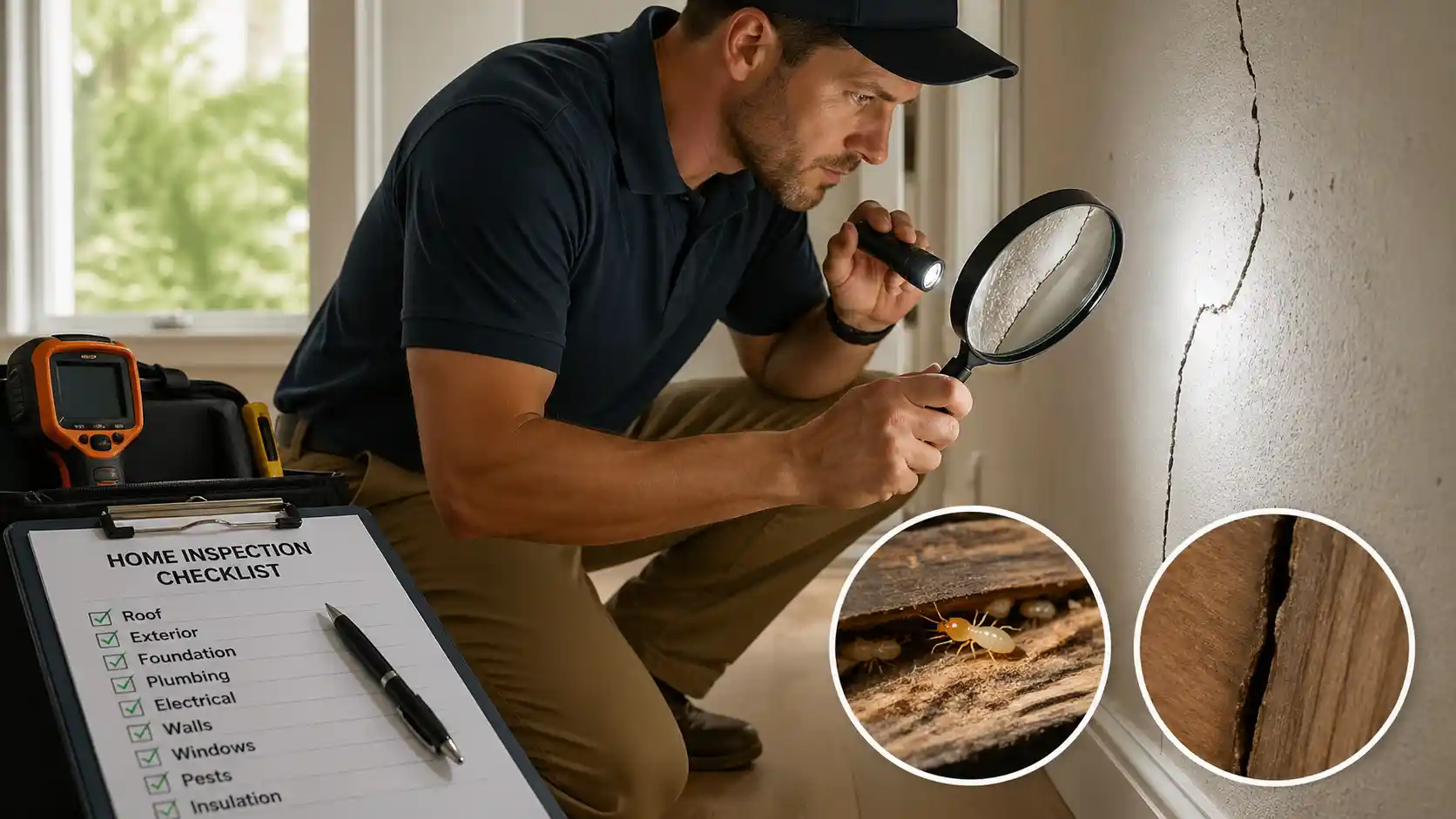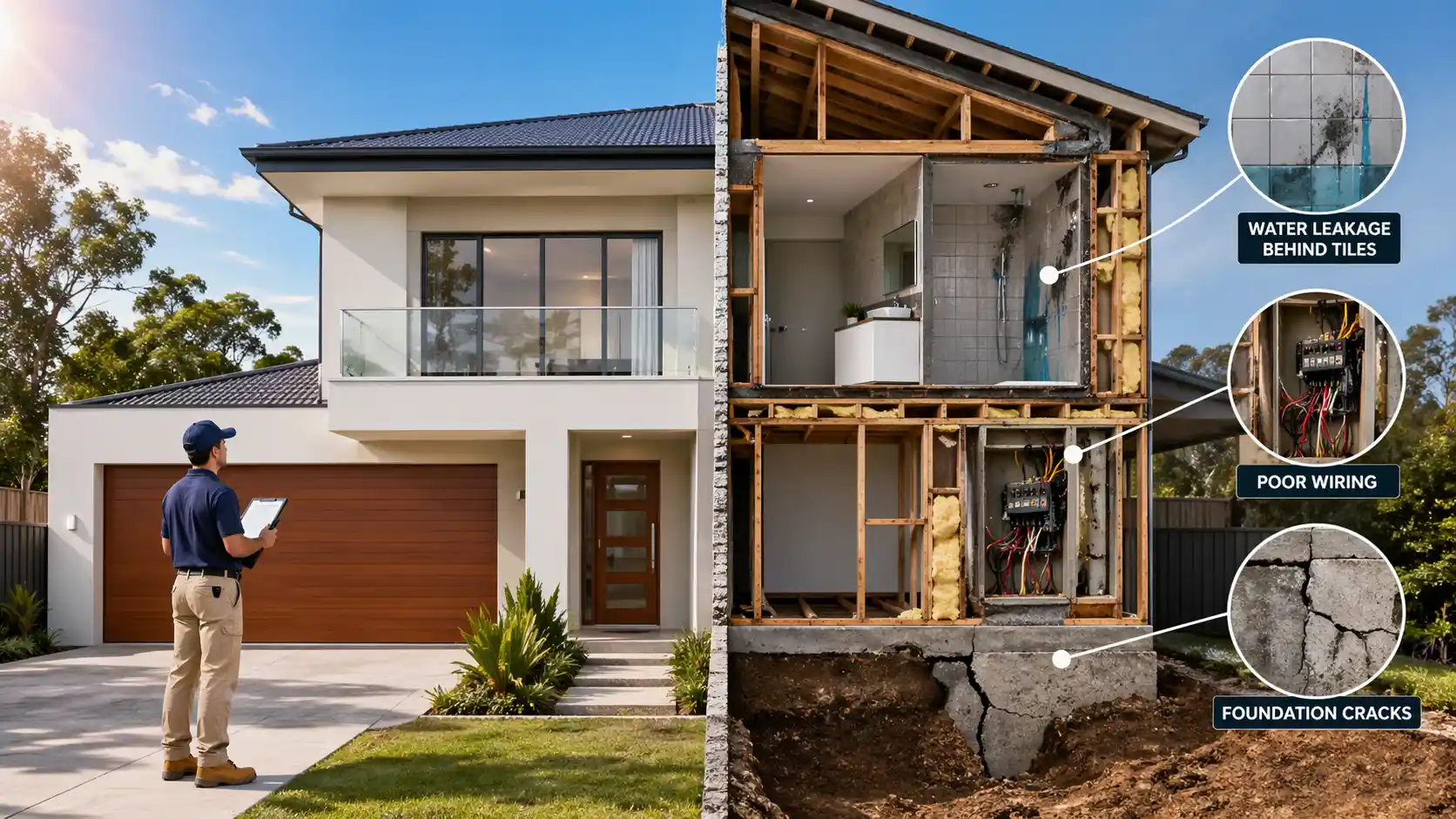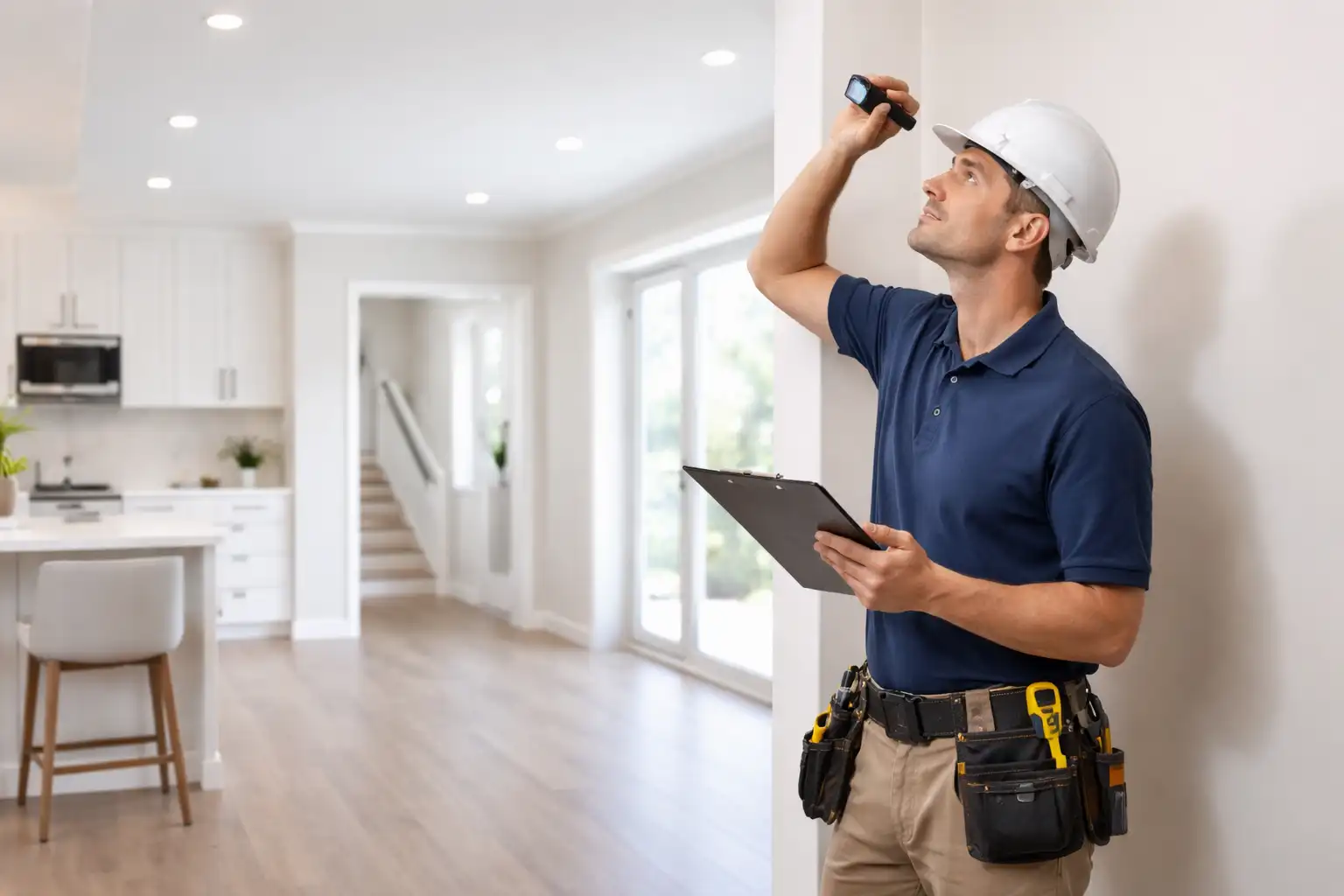
Ever moved into a seemingly perfect Rockhampton home only to find hidden nightmares? You might have a dreamy front yard, but behind the walls anything could be brewing – think termite damage, mould, or cracked foundations. This is where a Safety Home Inspection Rockhampton comes in. It’s a detailed health check for your house. An inspector (like a licensed building inspector or certified house inspector) tours every corner, looking for hidden dangers.
They follow Australian Standards (e.g. AS 4349) to review structural soundness, safety hazards and compliance. By catching problems early, you save thousands on repairs later. As one expert put it, buying without an inspection is “like signing a contract without reading the fine print”.
What Is a Safety Home Inspection?
A safety home inspection is a professional check-up of a house before you move in (or even periodically if you own it). In Rockhampton, it’s done by a certified building inspector or licensed building inspector who knows local risks (like cyclones or termites). They evaluate the house structure and systems: foundations, roof, walls, decks, wiring, plumbing, and more. Think of it as a doctor’s physical for your house.
The inspector follows Australian rules (AS 4349.0/AS 4349.1 for buildings, AS 4349.3 for timber pests) and typically gives you a written report. This report lists defects, hazards, or repairs needed. For example, they’ll note if a ceiling looks saggy (possible structural movement), or if your smoke alarms are outdated. All findings are put plainly so you understand “what’s urgent” and “what’s manageable”.
- Who does it? A licensed building inspector or a private certifier. They are usually insured and follow a code of practice.
- When to get one? Before buying a house (pre-purchase), when selling (pre-sale), or if you spot issues like leaks or structural cracks.
- What’s checked? Foundation and footings, framing, roof, drainage, plumbing, electrical, pest activity (termites, borers), and general safety features (smoke alarms, balustrades, etc).
Quick Tip: In Queensland, a building certifier must be licensed by the QBCC (Queensland Building and Construction Commission) and can be local government or private. They ensure your property complies with the Building Act 1975 and local standards.
Common Property Risks in Rockhampton
Rockhampton homes face some unique threats. A safety home inspection helps catch these before they turn into expensive surprises. Here are the top risks you should know:
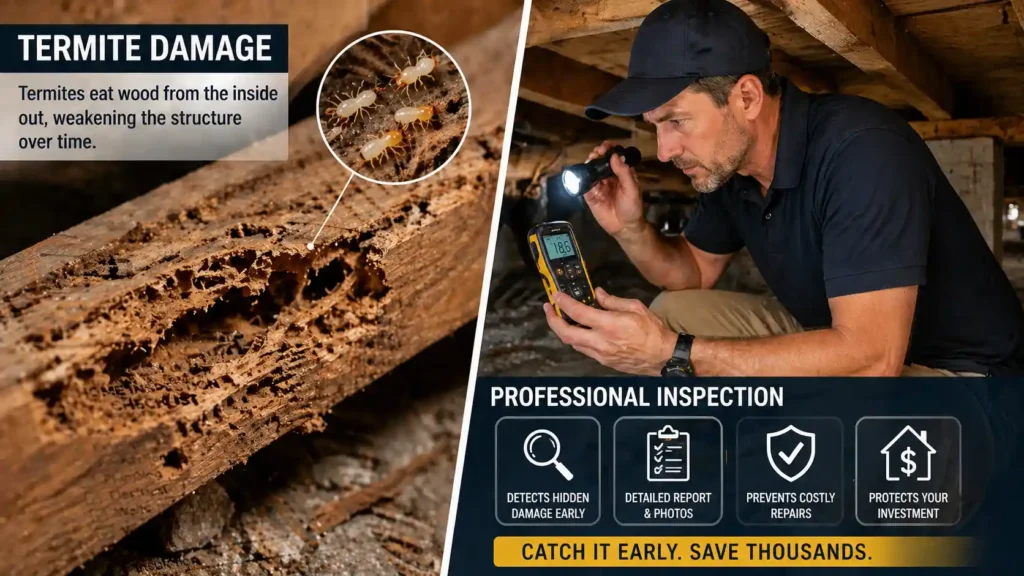
- Termites & Pests: North Queensland is termite country. These pests eat wood quietly, often inside walls or under floors. Termites cause more damage to Australian homes each year than fires or floods combined, and most insurance won’t cover it. A safety home inspection looks for early warning signs like hollow wood, mud tubes, or fine dust.
- Structural Problems: Cracks in walls or foundations can signal shifting soil or deeper issues. Sagging roofs may point to weakened beams or pest damage. Many problems stay hidden behind fresh paint, but early detection can prevent serious structural failure.
- Water Leaks & Mould: Small leaks can quickly turn into bigger damage in Rockhampton’s climate. Moisture leads to timber rot and mould growth. Inspectors check roofs, walls, and hidden spaces to catch leaks early.
- Electrical & Fire Hazards: Faulty wiring or missing safety switches can lead to fires. Inspections often include checking switchboards, wiring, and smoke alarms to reduce risk
- Non-Compliance and Safety: Unapproved additions like decks or pools can create legal and safety issues. Inspectors highlight missing barriers, unsafe railings, or work that doesn’t meet local rules.
- Climate and Environmental Risks: With storms and flooding common, drainage and water flow matter. Poor runoff or hidden water damage can weaken structures over time.
In short, an inspection reveals problems you can’t easily see. It helps you fix small issues before they become major, costly repairs.
How Inspections Prevent Costly Hazards
A safety home inspection is like an insurance policy against big surprises. By identifying issues early, you can negotiate fixes or a price reduction before you buy. It also means peace of mind: you’re not buying trouble.
- Spotting Termites Early: A pest inspection (often included with a building inspection) will find termites before they hollow out your floors. Treating an early infestation is far cheaper than replacing structural timber later. Remember, termite damage is usually not insured, so catching them costs you a lot less than if you find them after moving in.
- Catching Structural Defects: In one case, a couple found they needed to “put a prop across the kitchen to hold a wall” because of extreme wall movement – imagine the repair cost if they hadn’t fixed it! A structural review by a certified home inspector would spot shifting walls or cracking footings. Addressing foundation problems early (like underpinning or waterproofing a bit of soil) costs thousands. Catching it later (when walls buckle) could be tens of thousands.
- Negotiate Like a Pro: An inspection report arms you with facts. If the roof needs $5000 of repair (rotted battens or missing bracing), you can ask the seller to fix it or drop the price. The RACV notes that knowing about defects gives you negotiating power. On the flip side, vendors can also pre-inspect and fix problems, making their sale smoother.
- Budget Planning: Your report will list urgent repairs and “future maintenance”. For example, it might say “gutters rusting (repair in 1-2 years)” or “cracks at base of wall (monitor)”. This helps you budget. One report example: “gutters beginning to rust (could lead to leaks) and cracks from moisture/deteriorating stumps”. Armed with that, you won’t be blindsided by a new roof requirement after moving in.
- Insurance and Compliance: A building insurance inspection (sometimes required by insurers) checks if your house meets the National Construction Code. If you fail (due to old wiring, illegal additions, or no fire safety gear), your premiums go up or coverage gets denied. By getting a safety home inspection first, you avoid these headaches. According to Owner Inspections, houses that “meet the code and maintain safety” often get lower insurance premiums, whereas ones with hazards face “higher premiums, reduced coverage”.
- Safety and Peace of Mind: Beyond money, safety inspections protect lives. Detecting a faulty gas line or a weak balcony rail can prevent injury or fire. One study noted 17% of surveyed homes had serious hazards like bad wiring or structural weakness. An inspector lists these hazards so you can fix them before they hurt someone. Knowing your home is safe is priceless relief – you sleep better at night!
Australian Standards & Certified Inspectors
Not all “inspections” are created equal. In Australia, reputable inspectors follow standards like AS 4349.0/1 for building inspections. These lay out exactly what to check (and what not to). For instance, AS 4349.0-2007 ensures your inspector covers the basics of scope, how to report defects, and what areas (roof, subfloor, etc.) are inspected. There’s also AS 4349.3 for timber pests (termites).
In Rockhampton, always use a residential building inspections company or a certified house inspector with Queensland accreditation. A licensed building inspector will have public liability insurance and abide by the Australian Standards. The recent Queensland guidelines even say building certifiers must be licensed by QBCC and can be private or council inspectors.
Choosing a pro means:
- Thoroughness: They use moisture meters, electrical testers, thermal cameras, climbing gear, etc., not just a glance.
- Compliance Check: They know local council rules (like Rockhampton Regional Building Approval rules) and can spot non-compliant work.
- Written Report: You’ll get photos and clear descriptions. It’s not just “passed/failed” – it outlines severity. (Good reports follow client-friendly language.)
Don’t be fooled by extremely cheap offers. A quality safety home inspection might cost a few hundred dollars, but it’s a smart investment. As RACV’s expert says, it provides “an objective assessment” so you buy with clear eyes, not just heart eyes.
Real Rockhampton Examples and Insights
I’ve seen it in person. In one Rockhampton pre-settlement safety home inspection, a simple check uncovered loose roof battens caused by termite damage – the repair cost was over $3,000. Without that inspection, the new owner would have faced that bill unprepared. Another case: a back verandah was missing proper railings. The inspector flagged the issue during a safety home inspection, preventing a serious child-safety hazard.
Industry voices underline this. Marko Salapura from Rapid Building Inspections says skipping an inspection is risky – it’s about “making sure you’re buying with clear eyes”. Local Queensland buyers also warn about poor inspections; one Rockhampton couple mentioned they paid dearly for issues a report missed. Always check your inspector’s credentials.
Another tip: Rockhampton’s weather can hide problems. After heavy rains, did your walls stay dry? Have you noticed new cracks? Inspectors often advise monitoring changes after storms, as flood or cyclone damage can develop slowly over time.
Preparing for Your Safety Inspection
- Gather info: If you have any building plans, past repair invoices, or council approvals (like for that garage conversion), have them ready. These can speed up the check.
- Fix obvious small things: Replace dead light bulbs so wiring can be tested. Clear garages of clutter so underfloor areas are accessible.
- Attend if you can: Tagging along during the inspection lets you ask questions on the spot (“What’s that dark stain on the ceiling?”). Inspectors often explain in plain English as they go.
- Expect the Report: Within 1-3 days you’ll get a detailed report. It might be lengthy, but key sections (like “urgent safety issues”) are usually flagged. Look over it and ask the inspector about anything unclear.
By doing these, you make the most of your new house inspection or inspection before selling.
Conclusion
A Safety Home Inspection Rockhampton isn’t just another expense – it’s your home’s safety net. It turns unknowns into knowledge, and fear into confidence. The insights from AS standards and expert reports show that most Aussie homes do have hidden issues. Why gamble on yours? Get a professional to peek inside those walls before you move money around. You’ll sleep easier knowing you’ve caught termites, mould, or dodgy wiring before they catch you out.
Ready to protect your investment? Grab a cuppa, give a trusted certified building inspector a call, and book that inspection. Your future self (and wallet) will thank you.
FAQs
1. What’s covered in a Safety Home Inspection Rockhampton?
A licensed building inspector checks the entire structure and systems: roof, walls, foundations, plumbing, electrical, and for pests. They look for any safety or building code issues, hidden defects, and provide a detailed report on faults and repairs.
2. How often should I get a home inspection?
For buyers: get an inspection before purchase (especially for a new house). For owners: consider one every 5 years or after major events (floods, storms). Even newer homes can develop issues, so periodic safety inspections help catch wear, leaks or termites early.
3. Do I need a licensed or certified building inspector?
Yes. Only use a licensed building inspector or certified home inspector with insurance. They follow Australian Standards and know local Rockhampton rules. Unlicensed checks might miss major issues. A certified inspector gives a thorough, credible report.
4. Can an inspection save me money?
Absolutely. By finding problems early, you can negotiate fixes or a price reduction before buying. It also helps avoid surprises like a giant termite bill. Inspections can lower future repair costs and may even improve your home insurance rate (safer, compliant homes often get better premiums).
5. Does home insurance cover all defects?
No. Most home insurance excludes defects from poor maintenance (like termite or gradual rot). It generally won’t pay for “old wear-and-tear” issues. That’s why a safety home inspection is key: it catches things before they become an uninsured disaster