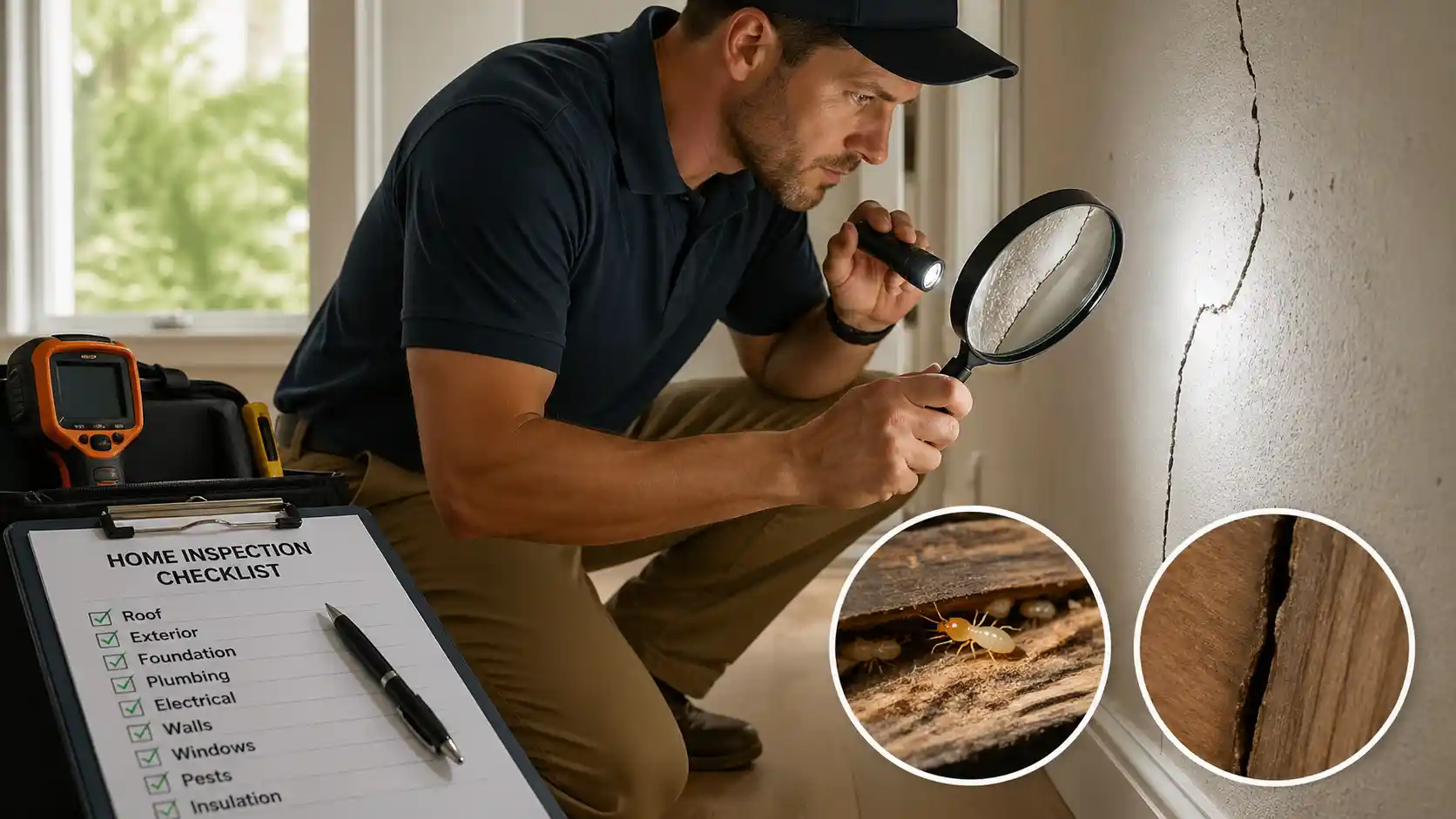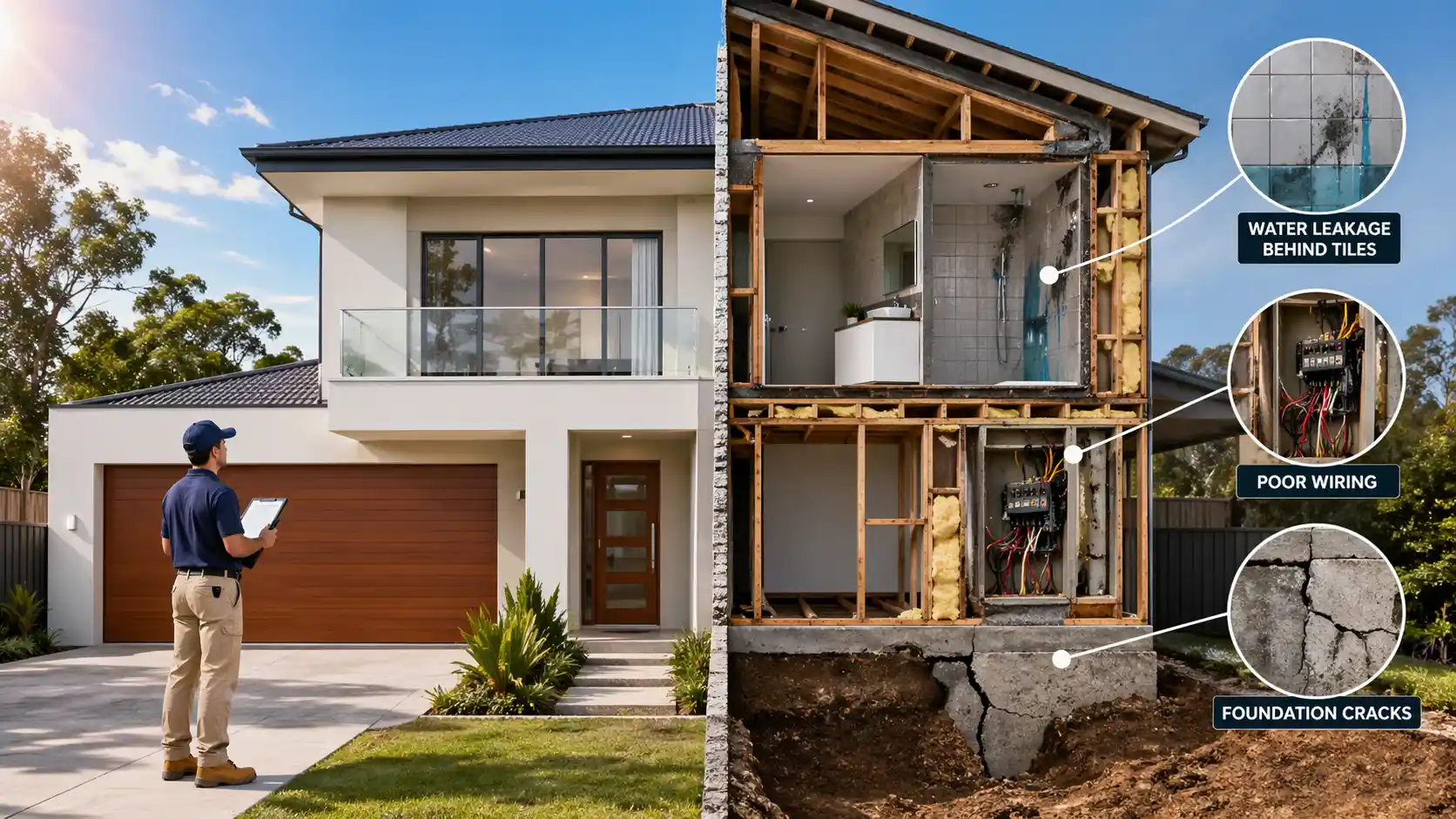
Pool Safety Inspection in Rockhampton is more than just ticking boxes – it’s about keeping your family safe and compliant with Queensland law. In Rockhampton’s hot climate, backyard pools are a blessing, but nearly 18% of drowning fatalities in SE Queensland occur in pools. Whether you’re splashing around or simply chilling by the deck, following proven safety tips is a must.
Think of your pool barrier as a superhero shield: it must be solid, high, and unclimbable. Before any formal check, do a quick self-assessment: measure fence height, test the gate, clear the area of temptations (like chairs or toys) and post a bright CPR chart. Preparing early for a Pool Safety Inspection in Rockhampton can save you time, stress, and unexpected repair costs.
Rockhampton Regional Council emphasizes that any pool deeper than 300mm or larger than 2,000L must have a compliant fence. Practically, that means even inflatable kiddie pools usually need a barrier. Always register your pool with QBCC and get the mandatory building permit before construction. If you ever sell or lease your home, Queensland law requires a valid pool safety certificate – typically issued every 2 years for a private pool. In short, safety checks protect lives and ensure your property isn’t derailed by fines.
Why Pool Safety Inspections Matter
First off, a well-maintained pool is a happy pool. An inspection helps catch weak spots before an incident or a fine. It’s not just about rules – it’s about protecting kiddos and pets. Royal Life Saving Society data shows that many children aged 0–4 drown in home pools. A pool safety inspection in Rockhampton spotlights hazards like latches that are broken, fences that sag, or missing CPR signs. Passing an inspection gives you peace of mind (and can even boost your property’s value as a safe, polished feature). In short, a pool safety inspection in Rockhampton is your ticket to confidence: you’ll know your pool area meets strict Queensland standards and that everyone can cool off without worry.
Understand Local Regulations
Being in Queensland (and specifically Rockhampton) means following the QLD Swimming Pools Act and related standards. The Queensland Building & Construction Commission (QBCC) sets the pool safety standard. Key rules include:
- Fence requirements: All pool fences must be at least 1.2 m high above ground. There must be no gaps larger than 100 mm under or between fence panels. Fences should stand on solid ground, even on slopes or steps.
- Non-climbable zone: The area immediately outside the fence must be clear of anything a child can climb (tables, bikes, stacked wood, etc.) within a 900 mm zone. Rockhampton Council explicitly warns owners to remove any climbable hazards near the fence.
- Gates: Pool gates must open outwards (away from the pool) and self-close from any position. The latch should automatically engage and sit at least 1.5 m above ground on the outside. Inside the gate, the latch can be lower but must be shielded so little hands can’t reach it. Hinges should be spaced or capped to prevent scaling.
- Permits and registration: Rockhampton owners need a building permit for any new pool or spa, and must register the pool with QBCC. Inflatable or temporary pools are not exempt – they often get overlooked but still fall under the law.
The council reminds us: “Check fencing, ensure gates close properly, and remove any potential climbing hazards from the pool area”. In practice, that means your fence should rise straight from the ground (no dig-outs) and gate hardware should work like clockwork. If an inspector finds issues, you’ll likely have to fix them or face fines. Better to stay ahead by knowing these requirements inside out.
Essential Fence and Barrier Tips
To prepare for a pool safety inspection in Rockhampton, start with the fence. Measure it! A tape measure is your friend. It must be 1200 mm (1.2 m) tall at every point – not shorter on a slope or at stairs. Any sections below 1.2 m need adjustment. Check the bottom gap (no more than 100 mm) and ensure vertical slats are close (≤100 mm apart).
- Height check: Use a level or square to measure the fence height perpendicular to the ground; remember steps change the measurement point.
- Fill gaps: If you see a bottom gap >100 mm (for example, under a gate), either lower it or add a panel. Replace any broken or rotted panel right away.
- Non-climbable zone (NCZ): Walk around the outside of the fence and make sure nothing is within 900 mm of it. That includes lounge chairs, tables, BBQs, even tall garden pots. Rocky fences or stone walls might need a 60° wedge fitted on top of horizontal rails to extend the NCZ.
- Fence material: Timber fences should be well-maintained (paint or seal to prevent rot). Metal fences should be rust-free. If you have a glass barrier, look closely at seals and supports – cracks or chips make it unsafe. A small crack can disqualify a panel, so replace any damaged glass.
- Check posts: Gently rock each fence post; none should move more than a few millimeters. Loose posts mean loose panels, which means fail. Tighten or concreted them if needed.
Inspect these barriers as if a toddler is on the loose – if they might climb it, fix it. Following the Rockhampton Council’s advice, ensure all fencing complies with standards and that nothing near the fence can be used as a stepping stool.
Gate, Latch and Hardware Checklist
Gates are the door to your pool world – they must behave perfectly. Queensland law is strict: gates must self-close and self-latch from any position, and they must never open towards the pool. Basically, after you let it swing open, let go, and it should shut and click closed on its own, every time.
Here’s what to test and fix:
- Self-closing: Open the gate to various positions and watch it close. If it sometimes stays open or closes too slowly, the hinge spring might be worn. Tighten or replace the spring so that any swing triggers closure. Lubricating hinges can also help smooth the motion.
- Self-latching: Push the gate hard shut from outside – it should latch without you having to pull the knob. If it doesn’t catch, adjust the latch bolt or replace the latch. Ensure the latch handle on the outside is at least 1500 mm high. On the inside, the latch (inside the shield) should be a bit lower but shielded. Install a 450 mm radius shield around the inside latch so kids can’t reach in and flip it.
- Gate orientation: Confirm the gate opens outward. If any hinge is modified or reversed so the gate swings in, reinstall it correctly. An inward-opening gate is illegal. After every repair, recheck that opening direction.
- No obvious bypass: There should be no gap over ~10 mm between the gate and posts where a finger or tool could open it. If you see one, insert weatherstripping or adjust the latch plate. Children are tiny and resourceful – eliminate those little openings.
- Hinge safety: Are the top and bottom hinges at least 900 mm apart? If not, add a hinge extension or a 60° cap to the lower hinge, which prevents it from acting as a foothold. Ensure no hinge pin is loose – tighten it, or replace the whole hinge if it’s bent or corroded.
Cr Mathers from Rockhampton Council sums it up: “Check fencing, ensure gates close properly…”. In practice, that means do the gate dance: swing it, shut it, latch it, open it, latch it again. If you wouldn’t trust a curious 5-year-old to leave it alone, fix it. A gate that won’t cooperate during your self-inspection definitely won’t pass an official check.
Signage and Emergency Readiness
Don’t forget about signs and safety gear. Queensland requires a CPR sign displayed near the pool. It should be:
- Visible: Place the sign on or next to the fence, where anyone can see it before entering the pool area. The shallow end or steps area is ideal.
- Compliant: The sign must include the 30 compressions, 2 breaths instruction. It should be at least 300 mm x 300 mm in size and made of weatherproof material. You can get approved signs from pool safety stores or online.
- Emergency info: The sign should also state “Call 000” (emergency number) prominently, and remind bystanders to stay with the victim. If the sign just has a logo or generic text, it fails the standard.
Beyond the sign, keep lifesaving equipment handy: a ring buoy or shepherd’s hook by the pool (even if not required by law, they help in emergencies). Make sure they are easily accessible and in good condition. Also, ensure flotation toys or noodles are in the pool or secured, not strewn on the fence. These toys can look inviting, but can be slippery hazards if left in the way of gates or edges.
Finally, learn CPR yourself and for your family. During an inspection, demonstrating that you know the basics and have an up-to-date sign can earn extra peace points with an inspector. It shows you’re more than just legally compliant – you’re responsibly prepared.
Water Quality and Equipment Checks
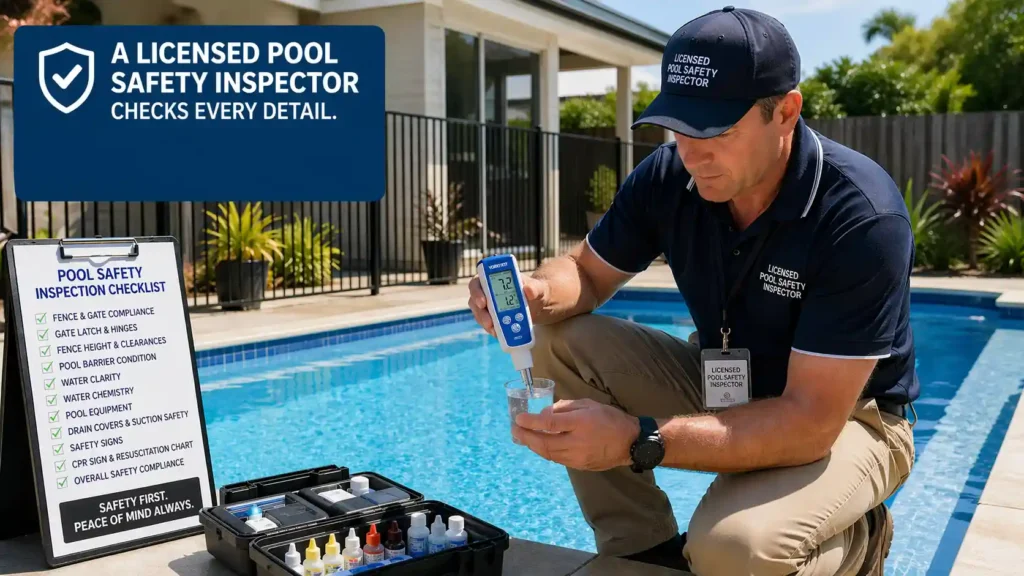
An often-overlooked tip: inspect the pool’s contents. Clean, clear water isn’t just healthier for swimmers – it actually helps inspectors do their job. When pool water is murky or unbalanced, it’s hard to see potential hazards (like a broken drain or broken tile). So before any inspection:
- Clear Water: Run your filter and vacuum the pool. Remove leaves, toys, and the occasional rogue sock. Keep the chlorine/bromine at recommended levels (around 1–3 ppm for chlorine). A clean pool gives the inspector full visibility of the floor, walls, and drains.
- Check drains and filters: While not usually the focus of a safety inspection (they check barriers first), drains can be a safety issue (suction entrapment). Make sure the main drain cover is intact and secured. If you have flat drains, ensure they conform to AS1926.1 (new standard) or have a backup system.
- Pump and skimmer: Make sure your pump and skimmer baskets are working. Though not explicitly in the barrier code, an inspector may note non-functional equipment as a sign of overall upkeep. Even brands of pool lights: they shouldn’t be cracked or leaking.
- Pool equipment storage: Store all tools (brushes, skimmer poles, chemicals) in a locked cupboard or at least well away from the fence and gate. Loose items near the pool can act as stepping stones in an inspection scenario. As the council guide says, “remove climbable objects away from the pool fence”.
Pro tip: If your pool pump isn’t running or the filter is clogged on inspection day, it doesn’t cause a fail, but it looks bad. A nicely filtered pool also feels more inviting – especially if the inspector decides to take a dip into some maintenance advice.
Preparation and Documentation
The day of the inspection is not the time to scramble. Gather any paperwork – especially proof of pool registration, prior compliance certificates, and building permits. Organize your compliance records on the phone or in a folder. If you’ve had any renovations (like replacing a gate or installing a new fence), keep those invoices handy too.
Consider a pre-inspection check. Some homeowners do an informal walkthrough (or hire a professional to do so) before the official inspection. This can flag issues like a failing latch or faded sign early. Fix them first. It’s better to address problems at leisure than under a tight deadline. A pre-check often means the actual inspection goes smoothly.
Finally, keep it maintained year-round. Don’t wait for the city inspector to roll up – make pool safety a habit. Monthly checklists (test the gate, inspect fences, skim debris) pay dividends. It’s part of responsible pool ownership, a bit like oiling your car or testing smoke alarms. Make it part of your routine.
Seasonal and Rockhampton Climate Tips
Rockhampton’s weather can be a double-edged sword for pools. The baking sun can warp plastics and dry out timber, while intense rains or cyclones can damage fences and gates. Here’s how to adapt:
- After rain and storms: Check the ground around your fence. Heavy rain can erode soil under posts, creating gaps. Tighten any loose posts and fill low spots in the fence line. Look for rust spots or peeling paint on metal fences caused by prolonged moisture.
- In high heat: UV rays can weaken UV-treated plastics (like gate handles or fence post caps). If you see cracks or signs of brittleness, replace those parts. Treat wooden gates/fences with a weatherproof sealant each couple of years to fend off rot.
- Wind-proof: A sudden gust could slam a gate; ensure latches still hold. Also make sure gate stops (bumpers) aren’t cracked. If storm debris (branches, trampolines) landed near the pool, clear it out immediately – it could knock open a fence or block the gate.
By scheduling a seasonal inspection every change of season, you stay ahead of wear-and-tear. For example, before summer beach season, give your pool area a once-over: soak your legs, then examine the legs of your fence! It keeps the fun continuous and compliance worry-free.
Working with a Qualified Inspector
A good pool inspection in Rockhampton often involves an expert eye. In QLD, only a licensed pool safety inspector can sign off on a safety certificate. These professionals are specially trained in the code. However, if you’re also doing a general building or new home inspection, many licensed building inspectors and certified house inspectors include the pool in their checklist. When contacting inspectors, clarify their credentials:
- Check license: A pool safety certificate must come from a QBCC-licensed pool inspector. Ask for their license number or who they work for. For broader home inspections, ensure the inspector is a licensed building inspector or holds certification (e.g. Master Builders member, or a recognized Certified Home Inspector program).
- Local knowledge: Rockhampton (and Queensland) has its own variations of the pool law, so a local inspector or Queenslander is best. Look for someone with positive reviews on local forums. Don’t just Google “pool safety inspector rockhampton” – we want no promos here – but you can ask neighbours or check with the local QBCC office.
- Communication: A skilled inspector should explain issues in plain English. They might say, “Your latch is too low” instead of quoting AS 1926 clauses. They should listen to your concerns (like worried about a wobbly post) and help you fix it.
Ultimately, pool inspectors and building inspectors overlap: many residential building inspections include pool safety if you request it. In a new home inspection, for example, the inspector should note if the pool fence looks non-compliant. When interviewing inspectors, slip in words like “house structure inspection” or “residential property inspections including pools”. Those are your buzzwords to ensure the pool is covered too. An inspector or certified home inspector worth their salt will appreciate your thoroughness and respond with professional advice.
Conclusion
Keeping your Rockhampton pool safe is an ongoing effort – think of inspections as routine maintenance for your paradise. A Pool Safety Inspection in Rockhampton isn’t just a checklist: it’s a proactive way to protect loved ones, avoid fines, and even enhance your backyard’s appeal. With every stone dropped (or weed trimmed out of the fence) and every gate latch tested, you’re building a stronger safe space.
Remember the key points: fences ≥1.2 m tall, NCZ clear, gates self-latch, CPR sign up, and water kept clean. Seasonally inspect for weather damage and call in the pros (a licensed inspector) if you’re unsure. By staying on top of pool safety, you ensure the only dives in your yard are the fun kind, not the regrettable kind. So keep goggles on at all times – whether in water or on your list of chores – and enjoy your Rockhampton pool with confidence!
By staying proactive and using these tips, Pool Safety Inspection in Rockhampton will be smooth and stress-free. Your pool can remain a fun, relaxing oasis instead of a worry – dive into safety first, and then dive into the water!
Frequently Asked Questions
1: When is a Pool Safety Inspection in Rockhampton required?
In Queensland, you need a valid safety certificate every 2 years for private pools and every year for shared pools. A Pool Safety Inspection in Rockhampton is also required before selling or renting a property.
2: Who can perform a Pool Safety Inspection in Rockhampton?
Only a licensed and certified inspector approved under Queensland regulations can conduct a Pool Safety Inspection in Rockhampton and issue a valid compliance certificate.
3: What do inspectors check during a Pool Safety Inspection in Rockhampton?
They check fence height, gate functionality, latch security, CPR signage, and ensure there are no climbable objects nearby. The goal is to meet all safety standards.
4: Do small or inflatable pools need a Pool Safety Inspection in Rockhampton?
Yes, any pool deeper than 300mm or holding more than 2000 litres must comply with safety laws and may require a Pool Safety Inspection in Rockhampton.
5: What happens if you fail a Pool Safety Inspection in Rockhampton?
You’ll receive a list of issues to fix. After repairs, a re-inspection is needed to confirm compliance before you can get a valid safety certificate.