
Buying a home in Rockhampton is exciting – imagine sipping morning coffee on your sunlit veranda! But wait: that snug Queenslander charm might hide a secret termite hotel or a leaky roof. That’s where a Licensed Building Inspector Rockhampton comes in, your personal home-buying detective. As a friendly local inspector, I’ll guide you through the pre-purchase inspection process, sharing practical tips and even a dash of humor. Trust me, having a keen-eyed professional on your side can save you huge headaches (and dollars) down the road.
At its core, a pre-purchase inspection is all about due diligence. You’re checking the house’s health – roof, walls, floors, plumbing and more – before committing. According to the Queensland Building and Construction Commission (QBCC), the inspector will look for obvious defects like a faulty roof, leaking ceiling, cracked walls, weak foundations, mould, poor waterproofing or drainage issues. In Rockhampton’s tropical climate, we also watch for termite damage and cyclone-readiness. Remember, the inspection isn’t a guarantee against future problems, but it reveals existing concerns so you won’t get sucked in by cosmetic fixes or hidden dangers.
Why Hire a Licensed Building Inspector Rockhampton?
You might wonder: “Why not just trust the agent’s promise of ‘perfect condition’?” Spoiler: Don’t. Queensland actually requires pre-purchase inspectors to be licensed. In fact, it’s the only state with this rule. That means every Rockhampton inspector must hold a residential building inspection licence – a government stamp of approval you should never skip. A licensed pro has formal training (often as a builder or surveyor), insurance and must follow Australia’s inspection standards.
So, seek out a certified house inspector or certified building inspector who lists Rockhampton or Capricornia in their service area. Check their license number on the QBCC website. Ask about their experience – for example, have they dealt with timber stumps or old asbestos fibro homes common in our region? A good inspector will gladly explain their qualifications and answer all your “why” questions. (Pro tip: If they hesitate or promise to find zero issues, that’s a red flag. A diligent inspector should spot something, even if it’s minor.)
Putting it simply: a Licensed Building Inspector Rockhampton acts like a professional truth-teller. They’re not working for the seller, so you get independent insights. A government consumer site bluntly warns, “be wary of any property inspection report offered by the agent or seller”. Your own inspector, on the other hand, has only your interests. They’ll arm you with facts to negotiate price or fix contracts.
What Happens During a Pre-Purchase Building Inspection
Now, what exactly does a pre-purchase inspection involve? Imagine it as a health check-up for the house.
- Comprehensive walk-through: The inspector will tour every accessible part – from roof to subfloor – often accompanied by the buyer (ideally you). I always say: “Be at the house for the inspection!” That way you can ask questions on the spot and see defects first-hand. For instance, I might shine a light on uneven tiles or point to water stains and explain if they’re cosmetic or serious.
- Check structural items: Expect them to examine the roof (for damaged tiles or leaks), ceilings, walls (looking for cracks or bulges), floors (checking if they’re sagging or bouncy) and foundations for any obvious faults. Common Queensland issues include sloping floors (often need stumps replaced) or fretting brick mortar (a sign of movement). If the house has been recently built or renovated, a thorough inspector also asks for permits and council approvals to avoid illegal extensions.
- Look for hazard signals: Signs of moisture (mould on walls, lifting tiles, peeling paint) can hint at leaks or damp problems. Red flags like blistered paint near skirting boards or rusted steel stumps should make you pause. And in Rockhampton’s post-rain season, we’re extra vigilant about termite activity. While Licensed building inspectors will note any evidence of termites (like mud trails), they’ll recommend a separate licensed pest controller for a full termite inspection. In short: termite checks are vital.
- Asbestos awareness: Many Queensland homes built before 1990 contain asbestos sheeting or insulation. A licensed inspector will flag any suspect materials. It’s not cause to panic, but if you plan renovations on an old home, know that asbestos requires special handling and extra costs. By law, they will point out possible asbestos areas so you can consider it.
- Detailed report: After the walk, expect a written report listing all faults found – from tiny cracks to major issues. It should note whether problems are repairable and estimate costs or urgency. In Victoria’s consumer guide, they highlight that a good report “lists any faults in the property, whether they can be repaired and how much repairs are likely to cost.”. We QLD inspectors do the same, often including photos. This report is your golden ticket: use it to renegotiate the price, request repairs or even back out if too many scary problems pop up.
Table: Common Issues Found in Pre-Purchase Inspections
| Issue | What It Means | Tip |
|---|---|---|
| Cracks in walls or floors | Possible subsidence or foundation movement. | Get an engineer’s advice. Small cracks might be surface; large or structural cracks need negotiation. |
| Leaking roof/rotten timber | Often due to old roofing or neglected gutters. | Factor in roof repairs (often expensive!). Use it to lower offer if needed. |
| Mold or damp patches | Sign of water ingress or poor ventilation. | Could hint at plumbing leaks. Consider professional moisture remediation. |
| Termite damage/tubes | Termites love humid QLD weather; they can chew through wood. | A free food source in Queensland! Always get a licensed pest inspection. |
| Asbestos materials | Common in pre-1990 homes (e.g. old ceilings or fences). | Requires licensed removal if disturbed. Plan renovation costs accordingly. |
| Faulty or outdated wiring | Electrical hazards or tripping circuits (safety risk). | Recommended to have a licensed electrician assess it before moving in. |
| Non-compliant renovations | Unauthorized decks, extensions or removed walls (no permit). | May become your responsibility. Check council records or get developer certificates. |
This table highlights that every issue – from cracked plaster to a creaky floor – has a backstory. A rock-solid Licensed building inspector in Rockhampton will explain each one. For example, a Victorian guide warns that “materials containing asbestos – if damaged or deteriorating – will need repair,” so we flag it. Or if we see sloping floors, we’ll chalk it up to shifting stumps or termite damage.
Top Tips from a Certified House Inspector
Let’s get practical. Here are some insider tips you’ll often hear from Certified Building Inspectors and certified house inspectors around Rockhampton:
- Be present at the inspection. This is your front-row seat. Come prepared with a notepad and your urgent questions (like “What’s that weird noise when the wind blows?” or “Is that sag in the joist dangerous?”). Being there means you learn on the spot. The QBCC literally says you should “ask the inspector anything you want to know about the house before you buy”. You might crack jokes with the inspector (hey, maybe I’ll show you my own “mystery stain” on the ceiling!), but also catch details you’d miss browsing a report later.
- Verify the scope and the credentials. Before booking, make sure you understand what’s included: some inspectors check pools and pest, others don’t. Always confirm the person is licensed. “Only a licensed residential building inspector can complete pre-purchase building inspections,” warns QBCC. In other words, don’t fall for casual “licensed building inspectors” – they must hold the official licence. Also check for professional indemnity insurance; an inspector without it might be cutting corners.
- Ask about standards and reports. In Australia, reports are typically based on AS 4349.1-2007 (the residential inspection standard). A top inspector will follow this. That means no guesswork – everything is documented. If an inspector starts tossing out phrases like “AS 3480-compliant”, give them props! It shows they know their stuff. (Honestly, a bit of jargon is okay when they translate it back to plain English for you.)
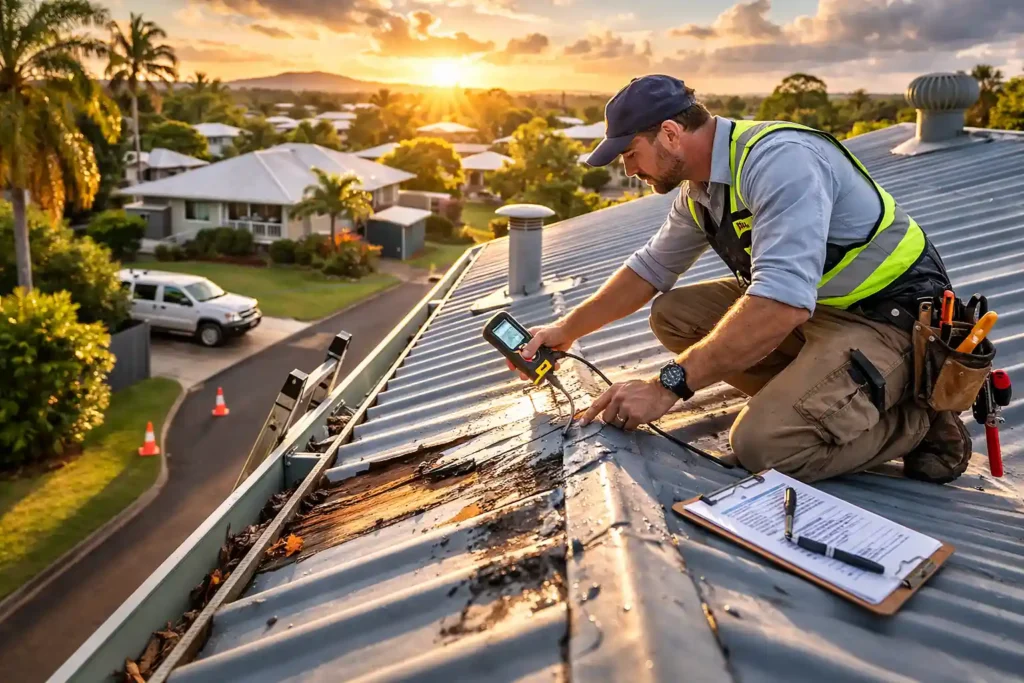
- Follow the red flags. A true pro knows that not all fix-ups are surface-level. For instance, a new paint coat could be hiding rising damp, or a fresh sealant in the bathroom might cover leaking pipes. We dig a little (safely!) with a screwdriver or moisture meter to test suspicious spots. If you see them taking an extra look at the electrical box or sniffing near the old weatherboard, trust the process. A lot of problems look harmless at first glance, but a certified house inspector in Rockhampton will sniff out the bigger picture.
- Bring a checklist. It might sound nerdy, but having a mental checklist (or a printed one) helps. Things like “Test a light switch, flush the toilet, open windows, check under sinks” – simple stuff! You’re playing detective too. I once had a buyer text me from another room, “Why is water dripping from the kitchen light?” We tracked it to a roof leak. We caught a major issue because the buyer was hands-on during the inspection. So get your Sherlock Holmes on.
- Attend to minor items, but focus on big concerns. Maybe the tap handle is loose or a cupboard squeaks; those are fixable DIY hassles. The big $$$ issues are what matter (structural cracks, termites, asbestos, faulty wiring, etc.). If the inspection report lists small “minor defects”, don’t stress. But if it lists “major” or “urgent” items, take them seriously. Sometimes the tiniest symptom – a whisper of mold smell – can indicate a big internal leak.
Credentials and Common Questions to Ask
Choosing the right inspector is half the battle. Here’s a quick checklist to vet them:
- Licence check: Ask to see their QBCC licence and name. You can even verify it online. No licence = no dice.
- Industry connections: Are they members of any professional bodies (like the Master Builders association or the Housing Industry Australia)? It’s not mandatory, but tells you they network with peers.
- Insurance: Confirm they have full professional indemnity insurance. This protects you if they (rarely) miss something critical.
- Experience: Have they inspected homes in Rockhampton specifically? Local knowledge matters – we know the peculiarities of Rockhampton homes: high-set stumps, fibrolite fencing, limestone footings near the Fitzroy, etc. A city slicker from Sydney might not spot tropical timber rot as fast.
- Report clarity: Ask for a sample report. A good one is clear, pictorial (with photos), and jargon-free. You should understand every point. If it looks like a college lecture, find someone friendlier with their pen.
Above all, feel comfortable with them. When you hire a Licensed Building Inspector Rockhampton, you want someone you can laugh with (yes, we do crack jokes about cheeky roosters and mysterious wall stains) but also respect when they say, “Woah, hold on” at a serious defect. A reliable Licensed Building Inspector Rockhampton knows when to keep things light — and when to get very serious. That balance of humour and honesty builds real trust, and trust goes a long way when you’re making one of the biggest purchases of your life.
Special Rockhampton Considerations
Rockhampton has its own quirks! Given our subtropical climate, keep these local factors in mind:
- Termites: We’re in “termite heaven” – warm, humid and (often) close to trees. All it takes is one barbecue ember left near the house, and you could be overrun. Inspections often uncover old termite damage (like chewed floorboards) even if no live bugs are visible. Always pair your building inspection with a licensed pest inspection. Remember, the QBCC is clear that only a licensed pest controller can conduct a termite inspection. If your building report flags termite hints (mud tunnels, wood that sounds hollow), follow up immediately.
- Cyclone and storm prep: Sure, Rockhampton is inland, but we feel the wind. (Ever see a roof flying off in a wild windstorm? Yikes.) A thorough inspector notes the condition of gutters, roof tie-downs, and the general storm resilience. Missing or rotted roof tie-downs and corroded gutters can spell trouble in a downpour. If you’re house-hunting in February or March, ask if the last tenant did a storm checklist.
- Flood risk: Some streets here flood when the Fitzroy swells. Always ask about recent history. Check the local council (Rockhampton Regional Council) for flood maps or advisories. Even if the house sits high, water issues can weaken foundations. A savvy inspector will mention any cracks or patch jobs on foundations – they often hide flood scars.
- Asbestos: As noted above, many older Queensland homes have asbestos cement in walls or ceilings. It wasn’t illegal back then, but disturbing it is now a nightmare for your lungs (and wallet). One of the easiest ways inspectors help is by simply pointing it out. Then you can plan to have it tested or removed safely. Better to budget for removal now than sneeze toxic dust later!
- Cultural features: Don’t overlook non-structural but important things. For example, if the house has verandahs or decks, check for rotten floorboards or loose railings (handy tips often given by inspectors). Also, investigate if any owner-builder work was done (seller’s disclosure). An owner-built home can have clever DIY, but if done without permit, you inherit the risk. The QBCC site reminds buyers that if an owner-builder has done work, the seller must disclose it – something to ask your inspector about.
By focusing on local issues, you’ll sleep easier when the next cyclone brews or the termite swarm forms in summer.
Navigating the Inspection Report and Next Steps
You’ve sat through the inspection, your report is in hand – now what? Here’s how to turn that information into action:
- Don’t panic at the long list. Every inspection report looks scary at first glance. It’s like a “defect dump.” But some items are cosmetic (peeling paint, worn carpet) while others are structural (sagging beams, termite damage). Prioritize the latter. Your inspector can often tell you which are urgent.
- Use it for negotiation. This is the money part. Say the inspector found a $5,000 roof leak and $2,000 worth of termite work. You can renegotiate the sale price or ask the seller to fix these issues before you buy. In QLD, you can make the contract conditional on a satisfactory inspection report. That means if an inspection “fails” your standards, you can walk away without penalty. It’s exactly what the QBCC recommends: “Make it a condition of your contract that you must be satisfied with the inspection before you will buy the house”.
- Consider future maintenance. If the house is older, use the report to plan ahead. Maybe that hot water system has three months of life left, or the old 1930s windows need re-caulking. A good inspector will often highlight what will need work in a few years. Treat it like a mini home-maintenance plan.
- Insulation and energy: While not every inspector is an energy auditor, feel free to ask about basic energy efficiency (ceiling insulation, sealed windows). Rockhampton gets hot, so a well-insulated or shaded home is a big plus. Sometimes simply being there and pointing things out lets you consider these comfort factors.
- Follow up small unknowns. If something was beyond the scope (like an engineer needed), act on it. For instance, if cracking suggests structural movement, hire an engineer for peace of mind. Think of inspectors as gatekeepers: they’ll say, “We can’t assess that; call the specialist.” Take that advice seriously.
Ultimately, the goal is to ensure you know exactly what you’re buying. Knowledge is power – and a serious bargaining chip. That’s why working with a Licensed Building Inspector Rockhampton makes all the difference. A previous client once joked, “Thanks to you, I didn’t marry my dream house (saving $100K) and found a fixer-upper with a cheaper price.” And honestly, that’s the win. Sometimes hearing about the flaws from a Licensed Building Inspector Rockhampton helps buyers make wiser, more confident choices — not just walk away, but negotiate smarter.
Conclusion
Buying property is one of life’s biggest deals, and you deserve to go in with your eyes wide open. A Licensed Building Inspector Rockhampton is like that trusted friend who whispers, “Hmm, I wouldn’t trust that tile job…” – often saving you from investing in a money pit. Remember to be curious and engaged: attend the inspection, quiz your inspector, and read the report carefully.
Our local Queensland home-buyer community relies on expert advice. Government resources (like the QBCC Home Owner Hub) emphasize being proactive with pre-purchase checks. So harness that guidance, combine it with these tips, and consider your home purchase phase as an adventure rather than a chore. After all, understanding every creak and crack lets you walk confidently through your new door.
Good luck, happy house hunting, and may your new Rockhampton home be everything you dreamed – minus the termites! Feel free to leave a comment or share your own inspection stories below; let’s help each other out.
Frequently Asked Questions
What is a licensed building inspector?
In Queensland, a licensed building inspector is a qualified professional (often ex-builder or surveyor) licensed by the QBCC to conduct residential inspections. They follow standards (like AS 4349.1) to thoroughly check a home’s condition before purchase.
How much does a pre-purchase building inspection cost in Rockhampton?
Generally, it ranges from about $400 to $800 depending on the size and age of the home. Think of it as a small price to avoid huge repair bills. (Exact prices vary by company, but it’s a worthwhile investment for peace of mind.)
Is a pest inspection the same as a building inspection?
No. A pest (termite) inspection is usually separate: only a licensed pest controller can do it. Your Licensed building inspector will look for visible termite signs, but they’ll recommend a dedicated pest inspection to be sure.
Should I attend the inspection myself?
Absolutely. The QBCC advises buyers to be at the house during the inspection. You can point out concerns (like that weird smell), ask immediate questions, and understand the inspector’s findings firsthand. This makes the whole process more transparent and informative.
Can I rely on the seller’s building report?
No. It’s best to get your own independent report. A seller or agent’s report could omit issues. Government advice warns buyers to be wary of agent-arranged inspections. An independent, licensed inspector works for you.